What Changes When a Painting Leaves the Studio?
Learn how a painting’s colour and surface read differently outside the studio, and compare the artist’s working light with the conditions in a gallery or home.
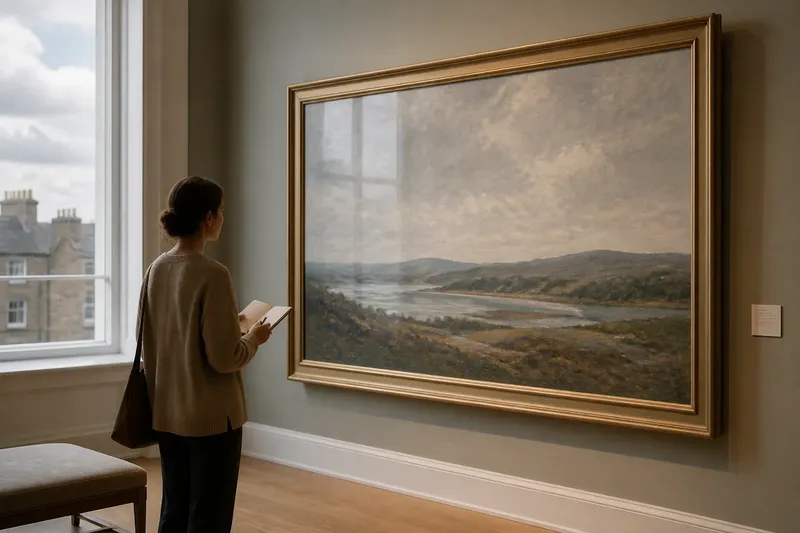
The common mistake is to treat a painting’s appearance in a gallery or home as the same view the artist had in the studio. What changes when a painting leaves the studio is its viewing environment: the light, wall, distance and reflections may all differ, so details that stood out during painting can recede or emerge.
The work itself need not have changed for your impression to shift. To understand the difference, consider what the artist may have seen while making it, then observe the conditions around the displayed painting without assuming you can reconstruct the studio exactly.
The studio and display room offer different viewing conditions
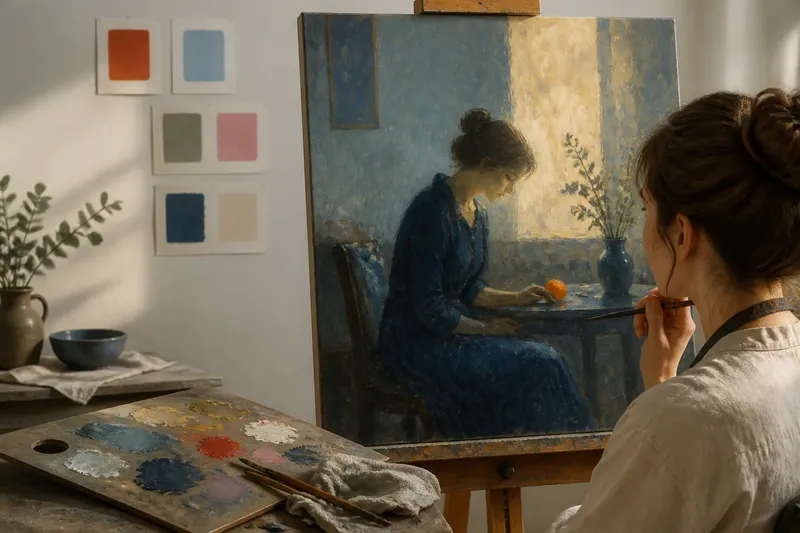
An artist can choose where to work, how to position a canvas and what light falls across it. That light might come from a window, a lamp or a mixture of sources; the painting may also be viewed at close range while it is being made. The conditions vary between studios, so there is no single studio appearance that applies to every painting.
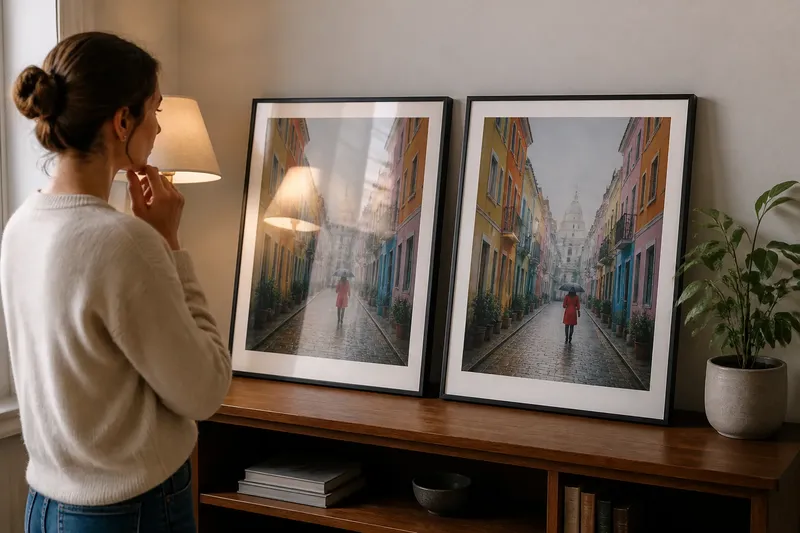
After a painting enters a gallery, a collector’s home or another display space, it meets a different arrangement. Window direction, curtains, wall colour, ceiling lights and the viewer’s distance all affect what is visible. A work displayed behind glass can also pick up reflections from windows or lamps.
This difference matters because an artist’s choices were made in particular working conditions, while later viewers encounter the finished work in theirs. You can notice that contrast without claiming to know the exact light in which the painting was made.
Daylight alters colour, contrast and visible texture
Daylight changes in direction and character as the sun moves and clouds pass. A painting near a window may receive softer light at one time and stronger, more direct light at another; rooms facing away from the sun may change less. Nearby buildings, trees and curtains can further affect the light reaching the work.
Colour is not a fixed experience shared by every viewing. A muted blue may seem more vivid under one condition and flatter under another. Pale passages can appear to merge, while dark areas may gain or lose distinction.
Surface details shift too. Side light can make raised paint, brush marks and differences in sheen easier to see; more even illumination may make them less obvious. The marks remain in place, but the light changes the cues available to your eye.
Compare the painting’s working and display settings carefully
You usually cannot see the original studio conditions, and a present-day studio visit may not reproduce them. Instead, compare what is knowable: the display room’s light and layout, the way the painting reads from different distances, and any reliable information the venue provides about its making.
Use this short checklist to decide what to inspect and what to do next:
- Window light: Check whether daylight reaches the painting directly; if it does, note the time and sky, then compare the view later if permitted, or describe the first view as direct-light viewing.
- Artificial light: Check whether lamps or gallery lights illuminate the work; if their effect is prominent, observe the painting under the available lighting without trying to adjust it, or ask venue staff about the display conditions.
- Reflections: Check for a bright window or lamp reflected in glass; if the reflection obscures part of the image, shift your position, or record that the view was partly obstructed if it remains.
- Wall and surroundings: Check whether a strongly coloured wall or nearby bright surface affects the scene around the painting; if it draws your eye, focus briefly on the work’s internal colour relationships, or note the surrounding colour as part of this display.
- Viewing distance: Check whether you can see both the whole composition and its surface; if the details disappear from your current position, move closer, or step back if the overall arrangement is hard to read.
- Available context: Check the label or venue material for information about the artist’s working conditions; if it gives specific details, compare those with the room you are in, or leave the studio conditions unknown rather than guessing.
Imagine you are looking at a landscape in a gallery on a cloudy morning. The label says it was painted in a studio, but gives no details about the studio’s windows or lamps. You first stand where a window reflection crosses the painted sky, so you move sideways; the reflection shifts away, and the sky becomes easier to inspect. You notice that its pale area sits close in tone to the hills, then record that observation alongside the cloudy daylight and the display room’s conditions. The result is a more useful account of what you saw, not a claim about how the artist saw the scene while painting.
Make a comparison without mistaking it for proof
Begin from a comfortable position and give your eyes a moment to adjust. Note broad relationships first: which colours stand apart, where the strongest contrast lies, and whether the surface appears smooth, layered or uneven. Then move closer if a particular detail needs attention.
A small notebook can preserve the viewing conditions. Write plain descriptions such as “the red looks duller” or “the ridges near the lower edge are easier to see”, with the time, general sky and whether the room used artificial light. Treat these notes as records of your impressions, not as an objective colour measurement.
A phone photograph is not a dependable substitute for looking. Automatic exposure and screen settings affect the image, while the photograph captures only one moment and one angle. Use it as a reminder of where you looked, not as a final record of the painting’s colour.
Which questions help explain the difference?
Can you tell what the painting looked like in the artist’s studio?
Usually, you cannot reconstruct that view from the displayed painting alone. Use only documented information about the studio, and keep any unknown details open rather than inferring them from the present room.
Why can the same painting look different in a gallery and a home?
The rooms may differ in daylight, lamps, wall colour, reflections and viewing distance. Those conditions change how colour, contrast and texture appear to you, even when the painting itself is unchanged.
Does side light change the paint surface?
Side light can make raised paint and small variations in sheen easier to see. It changes their visibility, not their physical position.
Can a photograph settle which viewing condition is accurate?
No single photograph settles that question, because camera exposure, screen settings and the light at the time all shape the image. Compare your direct observations and describe the conditions in which you made them.
Keep the display conditions in your account
When a painting leaves the studio, the conditions of making give way to the conditions of display, but the original working light may remain unknown. A careful viewer can still distinguish what is documented from what is visible now, and describe how the room affects the encounter.
For the clearest account of what changes when a painting leaves the studio, write down one visible difference and the conditions around it. If you return under different daylight, compare the same feature; if you cannot, preserve the first impression as a view of this painting in this particular room.